Susanne Barta is an author, coach, consultant, fair fashion fan and moderator.Born in Tyrol, she has been part of the GREENSTYLE gang since the 2nd edition, provides themed ideas from her adopted home of South Tyrol, has paved the way for GREENSTYLE to participate in #biolife Bozen and has moderated many of our conference topics since the 3rd edition.Don’t miss: her moderations for the virtual GREENSTYLE.
Susanne’s Style
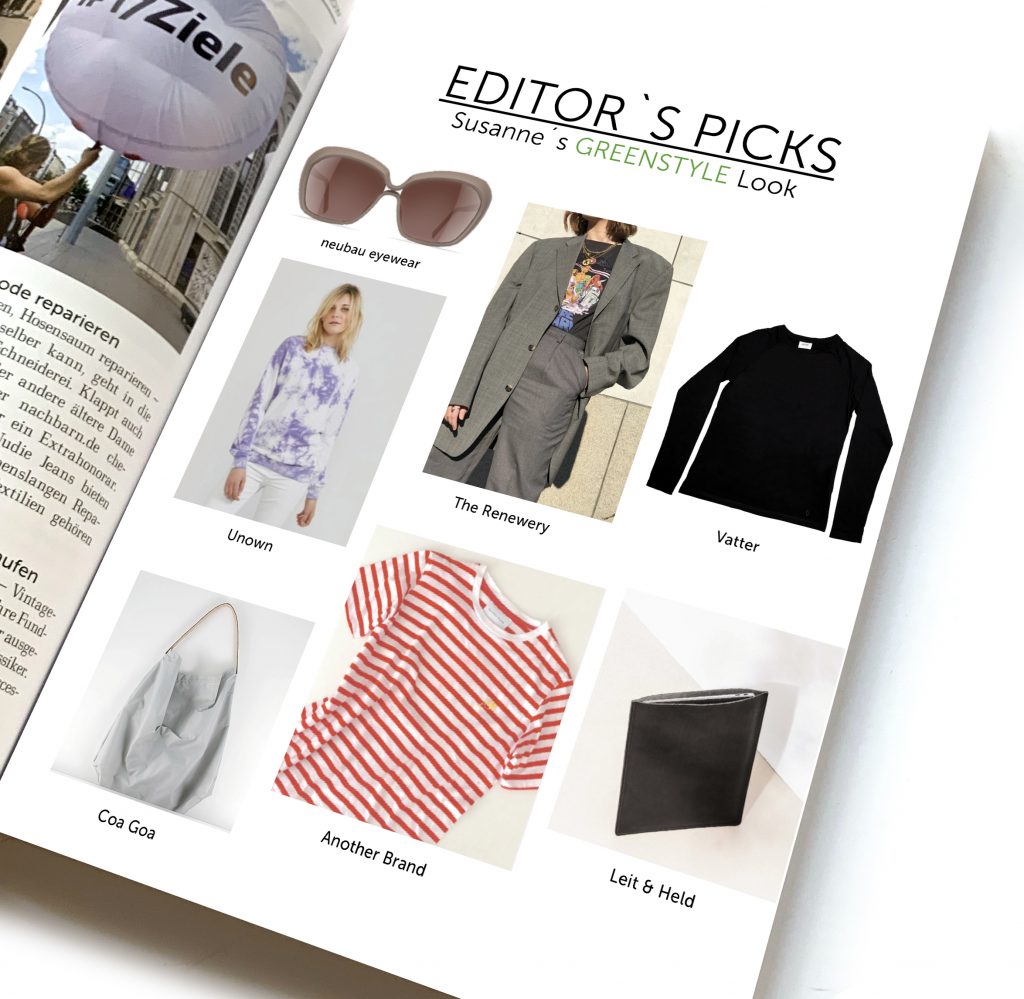
I love suits.For day and evening.Depending on the occasion, there are also: t-shirts, sweatshirts or blouses, sneakers, loafers or high heels.Accessories such as sunglasses, jewelry and bags break the strictness and make the outfit individual.The suit from “The Renewery” is perfect!And most of all, I like to update the concept of Renewery girls vintage parts.
Human trafficking is a major issue worldwide. And a very big issue in the textile industry. Unfortunately also in sustainable and “fair” textile production. Fiori Zafeiropoulou can easily be described as one of THE experts in this field. Her commitment does not stop at research and observation, Fiori is also the founder of SOFFA, a social fashion factory in Athens.
“The second biggest industry with labour trafficking is fashion. 72 percent are women and girls. One out of four is a child. Average age of children in slavery is 12 years old.”
Together with her team, she works with victims of human trafficking, among others, training them and preparing them for an independent future.
“Corona has two sides: The virus has led to the slow down of consumption. But the brands stopped the production without paying the factories. So the workers are not paid.”
The scientist and activist is globally networked and at the same time locally active. Fiori is a bundle of energy because in addition to all this she has also built up Fashion Revolution Greece and is the chairperson.
“For us as the global consumers the situation is a very good opportunity to reflect on our overconsuming habits.”
In an interview with Susanne Barta, human trafficking expert Fiori Zafeiropoulou talks about “modern slavery” and how Corona is causing great difficulties for production companies and workers. Does she believe that the current crisis will have a positive impact on the textile industry and consumers? “A lot has happened in recent years,” says the expert. And she believes that consumer awareness will continue to grow.
The renowned climate researcher Georg Kaser has given up optimism and pessimism. He can only talk about chances and opportunities. And what are they? “We can learn a lot from what is happening right now. This is about the global common good.”
Georg Kaser spends his home office time in Karthaus in the Schnals Valley in South Tyrol. Every day he exchanges ideas with his colleagues who are scattered all over the world.
“Climate change is far greater and more problematic than Corona will ever be.”
Even though the topic of climate change has disappeared somewhat from the media, intensive work is being done behind the scenes to bring back into the public’s conscious as quickly as possible what the state of our world is and what we can expect if no countermeasures are taken.
“The Corona crisis attacked us from behind and suddenly we were there. For most people, the climate crisis is still ahead of them, even though climate change has already begun.”
Because the experts agree: the challenges of the coming years will be much greater, Corona is at most a foretaste. “We can learn from this time,” says Georg Kaser, “I see opportunities that are currently available, but I also see the complexity. It is about nothing less than the global common good.”
Presenter Susanne Barta about Georg Kaser
Susanne Barta, who moderates the discussion with Georg Kaser is in constant contact with the expert. His humor and his untiring commitment to a better world are what, in her eyes, particularly distinguishes him, in addition to all his scientific merits.
We look forward to welcoming Georg Kaser live on the podium at one of the next editions of the GREENSTYLE conference.
“The situation is extremely confusing and dangerous,” says Thimo Schwenzfeier, show director of NEONYT and talks about chances and risks for the (fair)fashion industry in (and after!) times of crisis. Because the industry has to be prepared for the AFTER Corona period and then – each in his own way – offer the best possible stage.
Originally, we had planned that Thimo Schwenzfeier would give a keynote on the status quo of sustainable fashion at the 4th edition conference. With the Corona crisis, the topic of sustainable fashion has taken on a new direction and a different dynamic. That’s why, in the video, Thimo Schwenzfeier talks about the impact of the current situation on the fair fashion industry.
“The situation is extremely confusing and dangerous. For the fashion industry. And for the FAIR FASHION industry.”
As show director of NEONYT/Messe Frankfurt he has THE insight into the industry par excellence. With 220 exhibitors, NEONYT in January was the largest trade fair in the sustainable sector to date. The fear and uncertainty about the current situation is palpable for everyone.
“Everyone is in the same boat here: labels from NEONYT as well as from Innatex or Premium.”
But the situation is not only worrying for exhibitors, because Berlin Fashion Week, which is scheduled for the end of June, is just as affected by the current situation. Will it be able to take place? To what extent and with what formats?
“We must be prepared for AFTER Corona and then provide the best possible stage.”
As show director of the world’s leading B2B trade fair NEONYT, Thimo Schwenzfeier has insights into the trade unlike few others. It goes without saying that we turned to him in the first place when it came to giving an insight into the current situation and an outlook on the topic of “Fair Fashion and Corona”.
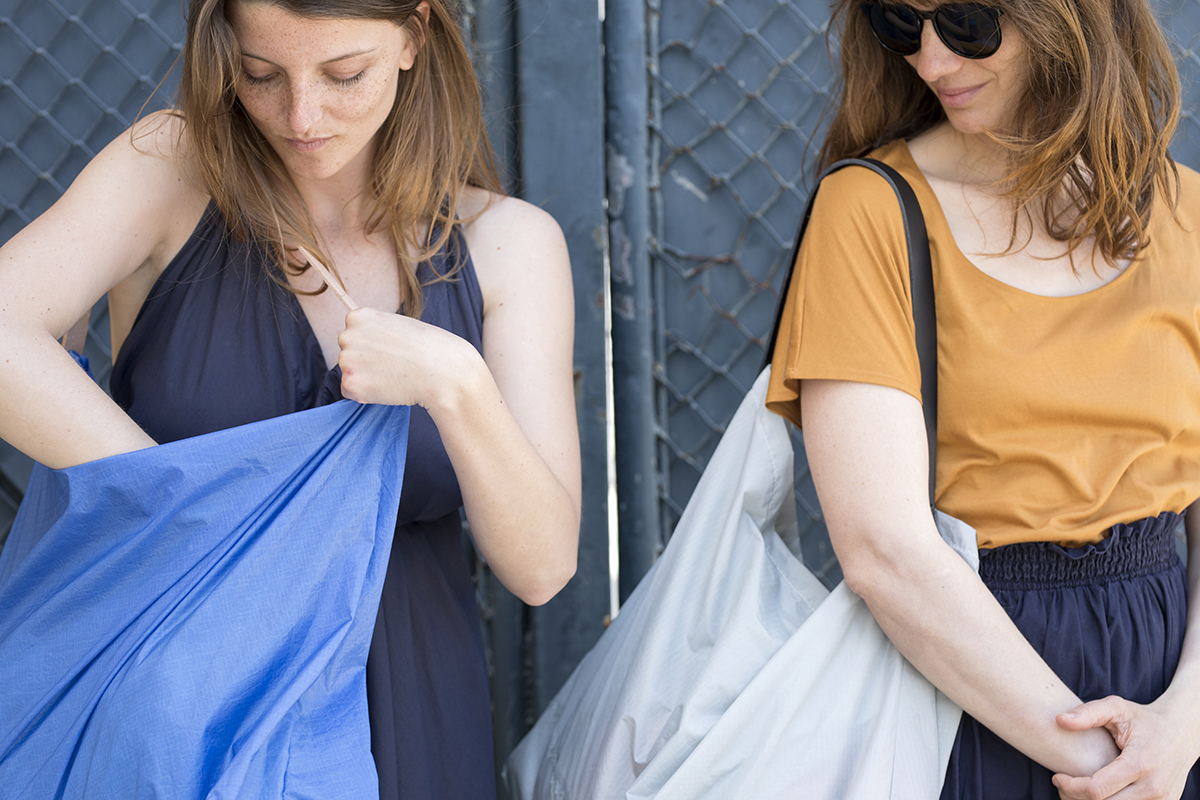
From discarded sails, Ursu and Ines, founders of the upcycling brand Coa Goa, manufacture diverse bags in Europe for all situations life throws at you. From the beauty bag to the weekender, from clean white to sunny yellow. At the GREENSTYLE the two creative makers wanted to meet you with their upcycling bags.
The following email has just reached us and is so beautiful that we don’t want to withhold it from anyone:
*****
Dear Greenstyler and Eco-Fashion Friends,
unfortunately we could not meet at the GREENSTYLE in Munich. We think this is a pity.
Now, we are all in the same boat and are making the best of it. I, for example, unpacked pencil and brush again. Haven’t used them for a long time, but it was a blast 🙂
ECO BRAND SUPPORT: Order now for free
For everyone who wanted to meet us at the GREENSTYLE in Munich and also for those who just urgently need one of our super beautiful, light and practical bags: Until the end of April (30.4.2020) we deliver WITHOUT shipping fees.
Just order your favorite Coa Goa Bag mit dem Promo-Code flymetothemoon.
All the best, Ursu & Ines
PS: The first 10 buyers* will receive a Coa Goa Zero Waste Bag, which were planned as giveaways for the GREENSTYLE 🙂
*****
GREENSTYLE Advice:
The first and unfortunately only contact we had with the Coa Goa Bags so far was at the photoshoot for the Fashionshow Looks. Our feedback: The whole team was extremely enthusiastic about the different formats, the nice colors and the fact that these bags are simply ultra-light. And hey: the next trip will be coming soon.
Retailers, brands, producers and consumers – from now on all parties must pull together to save the fair fashion movement through the crisis. The newly founded alliance #FairFashionSolidarity
The fashion industry is one of the biggest victims of the Corona crisis. Stores are closed, goods are in stock and can only be sold online. The supply chain is interrupted, production comes to a standstill. The full extent of the disaster will only become apparent in the following seasons, for which no collections can be produced.
Fair Fashion Solidarity
#newfashioncycles No discounts – no seasons
In order to rescue fair fashion brands from the situation that threatens their existence, the creators of the fair fashion labels LangerChen and Lanius are working together with the initiators of the online platform Avocadostore and the Berlin fair fashion stores Loveco. Together, they have written a manifesto and, as part of the #fairfashionsolidarity movement, they are calling for the renunciation of discounts for current merchandise and the breaking of the prescribed seasonal rhythm. The lost months of sales will be recouped by introducing the first discounts for current merchandise in August.
“We are now dependent on each individual. Whether it is the manufacturer who waives the discount in the online shop, the retailer who does not start his sale earlier or customers, who are willing to continue to pay the full price.” Christina Wille | LOVECO
The Website also provides tips and assistance for shop owners and brands on how to implement the new seasonal rhythm and calls on end customers, brands and shop owners to show solidarity.
Covid-19 is a virus. Fair Fashion is a movement.
This is what the consumer can do to support the #fairfashionsolidarity movement #weareinthistogether
SHOPPING ONLINE Shop on the sites of these brands.
NO DISCOUNT Be fair and pay the full (vital) price.
BUY VOUCHERS If not available: please ask!
RECOMMEND Divide their sites, tag them, talk about them.
Surfing online for topics that are important to me is part of my daily work. In this time of Corona, even a bit more. Besides comments, analyses and news on the far-reaching pandemic, I look and listen with great interest to how the textile industry is reacting to this crisis. And there is a lot going on right now.
Sustainability in fashion on the rise
People are writing and posting and therefore also thinking a lot. Sustainability in the textile industry – in fashion – seems to be rapidly increasing in importance. On the platform for industry professionals „Business of Fashion“ articles are lining up. Word seems to have got around that sustainability is not limited to producing or wearing a T-shirt made of organic cotton and that companies and consumers are becoming more aware of this now more than ever before.
Sustainability should be a lifestyle.
This concerns us personally, every day. I can imagine that through Corona we get a feeling for how living more sustainably can look like. This feeling could help us to understand that climate change is as real as Corona is, but, as experts emphasize, its effects will be much, much worse. We still have the opportunity to counteract this. And yes, do not lose heart.
Climate change is as real as Corona.
The sustainable fashion community is very active right now. It usually is, but Corona has stepped up the pace again. The 4th edition of the sustainable trade fair and conference format GREENSTYLE munich, for example, is now taking place virtually. With text, image and video contributions. The platform will be expanded digitally and thus become a hub of the sustainable fashion scene.
Anyone who has time and inclination to spend more time on the subject of textile production will find that the “Good on you” platform has put together some interesting information for the Corona era: Films, podcasts and upcycling tipps for creative people.
Sabine Vaas loves design and aesthetics. She has a feel for people and can put stories behind the scenes into words that we would never dream of. In short: Sabine can write. And she does so for all renowned high fashion magazines and among others also for GREENSTYLE. We love her portraits for VOGUE as much as for GREENSTYLE. You want to use the next weeks to give your website, your online shop etc. a new face? Sabine is happy to take care of portraits etc.
Sabine Vaas, born 1980, has been working as a freelance editor for various publishing houses, including Hubert Burda Media or Condé Nast, since 2010. Her thematic focuses: fashion, beauty, psychology, travel, interior, people and (green) lifestyle.
“Moving people – that is the goal of my work: writing, conceptualizing, developing ideas and themes, telling stories and communicating. Portraits allow me to learn something about the character and motivation of a person: What inspires them? Why do they do what they do? To perceive the nuances in conversation, to read the person and then tell their own personal story fascinates me anew each time.
So if you want to personalize your website with an expressive (short) portrait of yourself, need SEO optimized product texts or support in newsletter production, or need editorial texts, you’ve come to the right place.
Discovered today on Facebook: the brand letter from Christina Wille, founder of the LOVECO Stores on the subject of discounts. We wanted to put this topic on the conference agenda anyway. A look behind the scenes is urgently needed here, so that the context and the meaning of the (vital!) original price reaches the consumer.
Marisa Kohler bloggt seit einigen Jahren auf myfairladies.net for several years about a sustainable lifestyle and is committed to a life without plastic. She is a Fashion Revolution Ambassador and a very active member of the sustainable community in the Munich area.
But Marisa is also a pedagogue (M.A.) with a focus on organizational and personnel development, IHK certified business coach and resilience trainer. For ten years, she has been working on unlocking the potential and resources of adults and young people. Her main focus is on sustainability, stress management and minimalism.
We all need support and distraction right now.
Therefore, from now on Marisa offers discounted online coaching: Individual coaching for adults & teenagers on topics such as stress, overstraining, goal-setting, fear etc. as well as job application training/job coaching for teenagers (application document check, preparation for job interviews etc.)
Costs for adults: 40 Euro/hour Costs for young people under 18 years: 25 Euro/hour.
More information about Marisa’s entire offer can be found at www.marisakohler.de
Anna Schuster, co-founder and designer of the upcoming label JOA Fashionwanted to present her upcycling bomber jackets to the public at the 4th edition of GREENSTYLE. In the MODE COMMONING panel she wanted to talk about the universe of alternatives and in her talk #trashionable about garbage as a new raw material of the 21st century. We’ll make up for it. Now embroidery is about her way of coping with fear
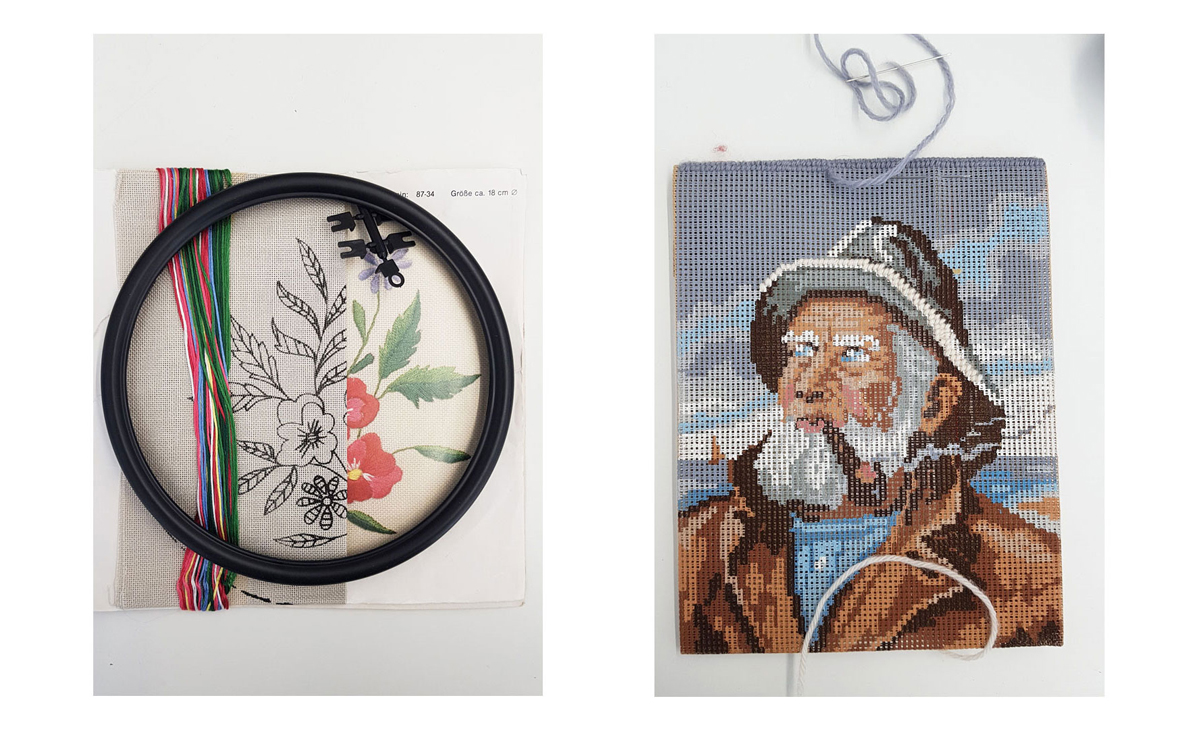
Embroidery is Anna’s creative solution to fear. Because it honestly accompanies us all. Everyone in their own way. Everyone deals with it differently. DIY and handicrafts against fear? Makes sense. Because anyone who has ever crocheted, knitted or sewed knows how quickly their thoughts wander. Another type of meditation that trains dexterity and mind and revives old techniques.
Embroidery Tapestry embroidery: Needlework against fear
It is no coincidence that companies like ‘Wool and the Gang’ or ‘We Are Knitters’ that sell knitting and crochet sets are thriving. Handicrafts convey a feeling of self-fulfillment that working on a laptop hardly offers. It increases cognitive skills, improves memory and body coordination.
Embroidery instead of Netflix and Instagram
What Netflix and Instagram are to society these days were embroidery and other handicrafts for our grandmothers and their mothers. A job, a distraction and an opportunity to spend time with neighbors and friends. By sewing, they were able to exchange news, skills and experiences. So why not revive these old techniques, which have disappeared from everyday life and the apartments, in times of self-isolation, as well as spending your free time in front of screens.
The JOA makers have collected vintage kits and show through tutorials and videos how everyone can embroider themselves. Try it out here
From rose viscose to circularity – the sustainable fashion scene speaks (not only!) About these trends and brands
Sustainable fashion largely foregoes trends – at least optical ones.It is less about “Brown is the new black” or “Welcome back Flowers” & Co. Circular economy, up, down, recycling and innovative materials for a responsible fashion future are the topics in the sustainable fashion sceneturns.Changing the fashion game
The range of eco-fairly produced fashion has never been as large as it is today – on the runways from Berlin to Milan, at the Big Bang Awards from Amfar to Oscar around the world as well as at the conventional fashion fairs in Berlin.In addition to NEONYT (Messe Frankfurt), the world’s largest trade fair for sustainable fashion, which was founded by Magdalena Schaffrin eleven years ago and has long since anchored sustainability in its DNA, conventional trade fairs have now also discovered the contemporary theme for themselvesdifferent formats on the agenda.
Sustainable fashion has come to stay.
What was announced in January 2019 has continued consistently: Because sustainable fashion has come to stay.And, finally, it is also more readily available to consumers through superbly curated online shops such asstaiy.com, thewearness.com and avantgardress.com
NEONYT
100 percent consistent and always in the DNA – the B2B trade fair, or more precisely the global hub for fashion, sustainability and innovation.Who found his new home in “Hangar 4” in Berlin Tempelhof in January 2020 and has never been as homogeneous as this season.220 brands have brought all facets of sustainable fashion from organic cotton to innovative fibers (including Lenzing, rose viscose from Like A Bird), certification programs (e.g. OEKO-TEX) and textile seals (including GOTS etc.) on the display.
“Neonyt sees sustainability not only as a fashion trend, but as a holistic innovation process for the entire industry.” Olaf Schmidt, Vice President Textiles and Textile Technologies (Messe Frankfurt)
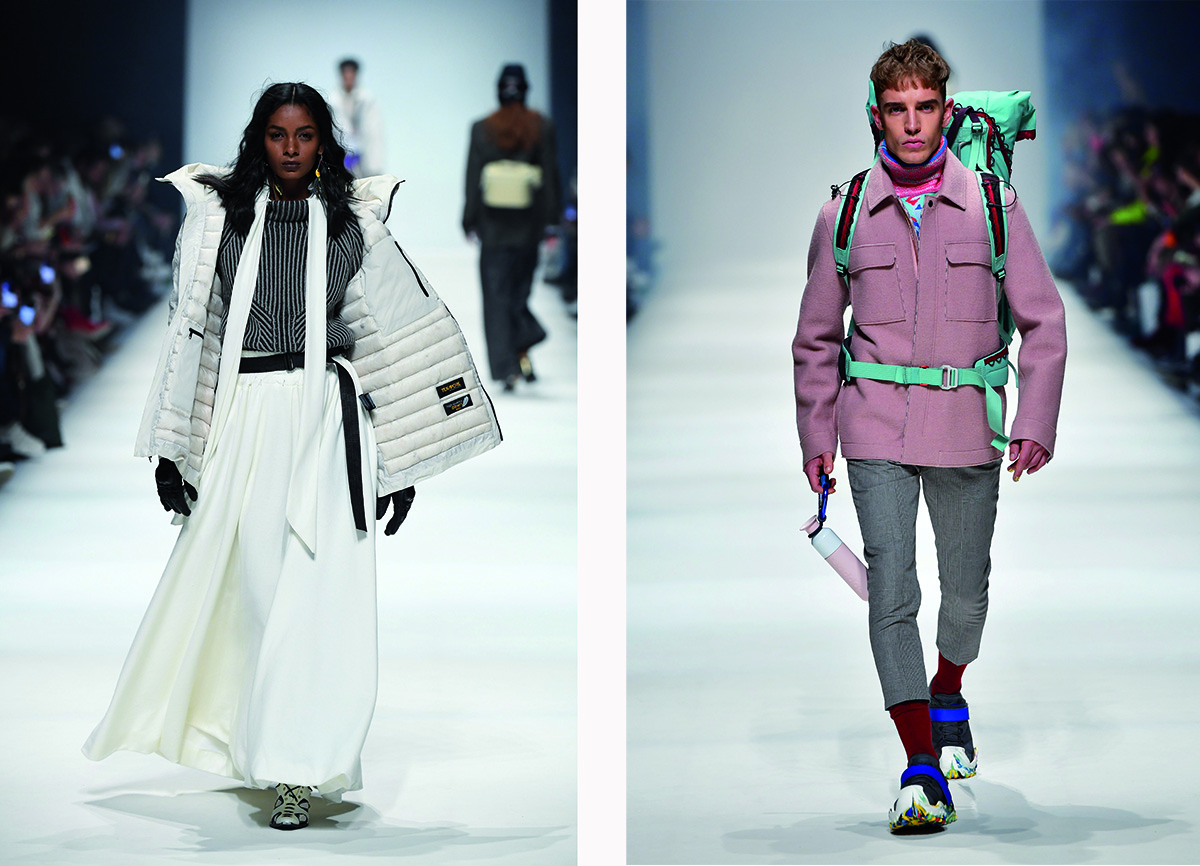
Definitely trend-setting and a highlight with maximum radiance has been the NEONYT fashion show since January 2019, which is now being shown in the official Mercedes-Benz Fashion Week show location.With the multi-brand looks of national and international eco brands, stylist and co-founder of Fashion Council Germany Claudia Hofmann has staged series productions that are second to none.The goal?Raise sustainable fashion to an international level.With content-laden styles, she has washed the German magazine elite into the front row three seasons in a row and given sustainable fashion a new image.Mission definitely accomplished.
DAWN denim by Marlen Müller
The denim offensive.It´s possible!
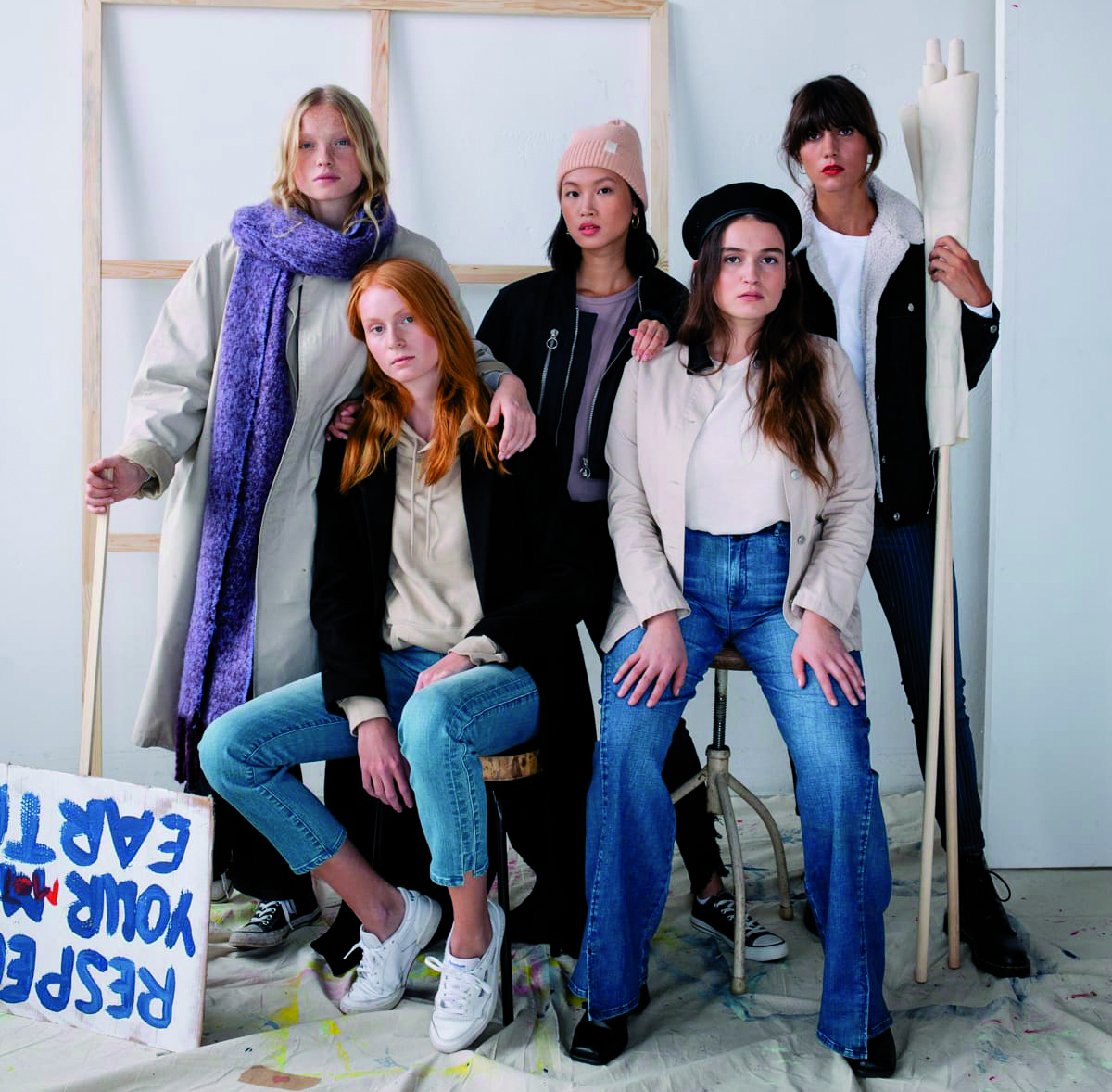
A really important topic considering that denim production is the No. 1 polluter in the textile industry.The World Bank estimates that as many as 17 to 20 percent of global water pollution results from dyeing and finishing textiles.Sustainable denim brands such as DAWN Denim, ONE OFF Sue, Mud Jeans, Wunderwerk and Goodsociety show that this does not have to be the case.The visual difference?None.The new denims differ only in the way they are produced.Thousands of liters of water and chemicals are required for conventional denim production and endanger people and nature.Smart detox campaigns by innovative denim brands show that our favorite blue fabric can also be produced with a significantly lower impact on people and nature.
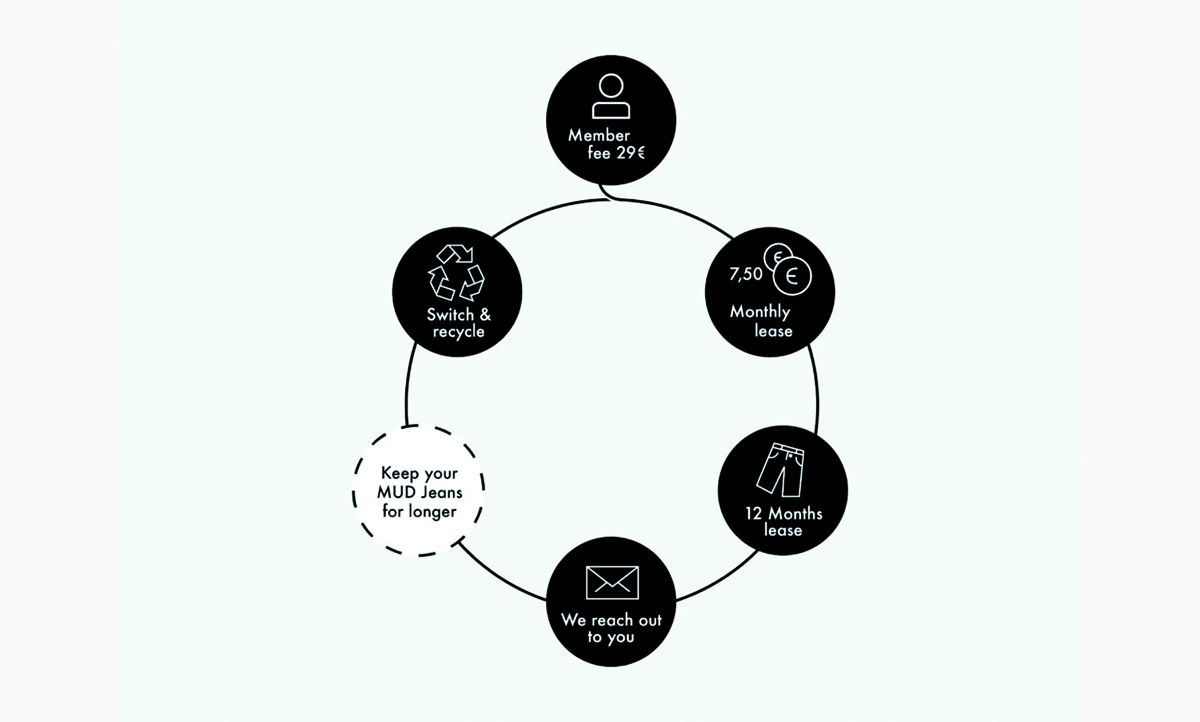
Organic cotton (e.g. armedangels, hessnatur), recycled cotton and PET for #lowimpact denim (e.g. DAWN denim), circular approaches such as leasing (e.g. mud jeans), repair and bring-back concepts (e.g. nudie jeans) – theThe list of smart alternatives to water and pesticide-intensive cotton can be continued for a long time.GOOD news: New brands and capsule collections are constantly coming onto the market that make the denim industry better with technological innovations (e.g. Dry Ice by DD Garment Solutions) and other sustainable developments.
The new new: material innovations, circularity & Co.
A key characteristic of sustainable fashion?The further development.This is not all about “beautiful” and aesthetics.This is about aesthetic alternatives, innovations and approaches that try to further reduce the impact of fashion on people and nature.These include smart methods of saving water, optimizing the dyeing process, avoiding pesticides and chemicals as well as innovative materials that do not waste new resources and of course the further development towards a circular economy with topics such as recycling and upcycling.
Hay, mushrooms, coffee, roses, PET, moss, glass, wood or with the skeleton leaves of a rubber tree are the materials that Sebastian Thies uses for his consistently excellent sneaker label nat-2 from Garching near Munich.The Spanish brand Ecoalf has given its sneakers made of recycled sea plastic (outer material) a sole made of algae.Christina Bussmann has been producing bags made of piñatex (also known as ‘pineapple leather’) for years.Even more new: dresses made from rose viscose, a material that not only feels good against the skin, but is compostable, and shirts made from coffee carbon that are made from waste from the coffee industry (both like a bird).
Apple pomace is much too good for organic waste.Hannes Parth, frumat
Cartina, an exciting material made from recycled paper, e.g.uses the Braunschweig pocket label Humor Noir for its vegan bags and Appleskin, produced from apple pomace, which is produced when apples are pressed and works as a deceptively genuine leather substitute for bags (including Nuuwai).Elsien Gringhuis works with dirt-repellent fabrics that need to be washed less often.Manaomea works with fabric remnants (including AA gold) and uses them to make pencils.
Ecoalf
One rubbish, the other textile
The subject of marine litter is no longer new, but is still incredibly important, and has meanwhile found a meaningful use in a wide variety of clothing and accessories.In addition to sneaker and backpack brands, the swimwear segment in particular has discovered these marine finds and made them usable.Brands that take advantage of plastic waste and thus make their contribution to cleaning the oceans includeBoochen, Mymarini, Margaret and Hermione.
Pyua
The next big thing: Circularity
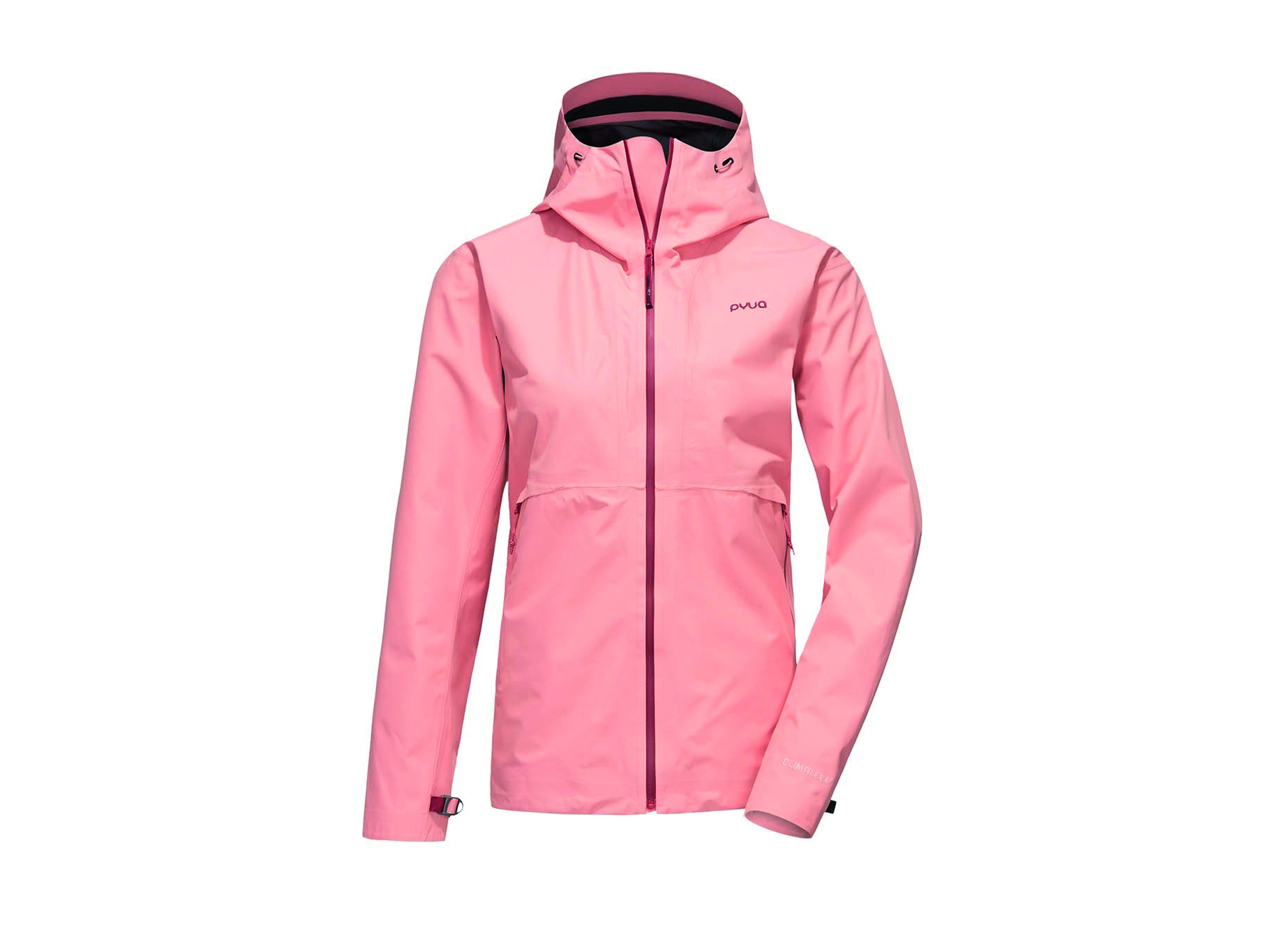
Nothing works without circularity.And that’s good.Because in the past 15 years the production volume of the fashion industry has doubled.The individual item of clothing is worn less and less and is disposed of faster.Just one percent of all textiles are recycled.That needs to change.Textiles have to be returned to the system and recycled.The German outdoor label Pyua, for example, only develops high-quality functional clothing made from recycled or recyclable polyester materials that they can use 100 percent in a closed cycle.Mud Jeans takes a similar approach to denim.Thanks to two investors, the Dutch jeans brand, which currently uses 40 percent recycled cotton, will be able to develop completely circular jeans from 100 percent old jeans.Until then, you can continue to lease jeans and thus close the cycle.
Reduce, reuse, recycle.
The Change of Fashion is now – NEONYT’s claim – is more realistic than ever.With innovative concepts and the awareness that any kind of change is not only inevitable, but necessary.
According to the Fashion Waste Index (Labfresh), Germany has secured 10th place among the most textile-polluting countries in Europe.We generate just under five kilograms of textile waste per capita.Only 500 grams can be recycled, and 400 grams can be recycled.The remaining almost three kilograms are burned (1.2 kg) or land in the landfill.(2.7 kg).Means: “Buy less but better!”
We use cookies on our website to give you the most relevant experience, so we remember your preferences and repeat visits. By clicking "Accept" you consent to the use of ALL the cookies.
This website uses cookies to improve your experience while you navigate through the website. Of these cookies, the cookies that are categorized as necessary are stored on your browser as they are as essential for the working of the system The basic functions of the website are essential. We also use third-party cookies with which we can analyze and understand how you use this website. These cookies are only saved in your browser with your consent. You also have the option to deactivate these cookies. However, disabling some of these cookies may affect your browsing experience.
Necessary cookies are absolutely essential for the website to function properly. This category only includes cookies that ensures basic functionalities and security features of the website. These cookies do not store any personal information.
Cookie
Duration
Description
__cmpcpcx-1
3 days
The Consent Manager sets this cookie to store user consent information.
_abck
1 year
This cookie is used to detect and prevent when a client attempts to play a cookie. This cookie manages the interaction with online bots and performs the appropriate actions.
ak_bmsc
2 hours
This cookie is used by Akamai to improve site security by distinguishing between humans and bots.
bm_sz
4 hours
This cookie is set by the provider Akamai Bot Manager.This cookie is used to manage interaction with the online bots.It also helps in fraud prevention
cookielawinfo-checkbox-analytics
1 year
This cookie is set by the GDPR Cookie Consent Plugin and records user consent for the cookies in the Analytics category.
cookielawinfo-checkbox-funktionell
1 year
CookieYes sets this cookie to record user consent for the cookies in the "Functional" category.
cookielawinfo-checkbox-necessary
1 year
This cookie is set by the GDPR Cookie Consent Plugin and records user consent for the cookies in the Necessary category.
cookielawinfo-checkbox-non-necessary
1 year
GDPR Cookie Consent Plugin sets this cookie to record the user consent for the cookies in the Necessary category.
cookielawinfo-checkbox-performance
1 year
This cookie is set by the GDPR Cookie Consent plugin and stores the user consent for cookies in the "Performance" category.
cookielawinfo-checkbox-preferences
1 year
CookieYes sets this cookie to record user consent for the cookies in the "Functional" category.
cookielawinfo-checkbox-werbung
1 year
CookieYes sets this cookie to save the user consent for the cookies in the "Advertising" category.
CookieLawInfoConsent
1 year
CookieYes sets this cookie to record the default button status of the relevant category and the status of CCPA.It only works in coordination with the primary cookie.
elementor
never
The website's WordPress theme uses this cookie.It allows the website owner to implement or change the content of the website in real time.
JSESSIONID
session
New Relic uses this cookie to store a session identifier to allow New Relic to monitor the number of sessions for an application.
viewed_cookie_policy
1 year
The GDPR Cookie Consent plugin sets the cookie to store whether or not the user has consented to the use of cookies.It does not store any personal data.
Functional cookies help to perform certain functionalities like sharing the content of the website on social media platforms, collect feedbacks, and other third-party features.
Cookie
Duration
Description
__cmpcc
1 year 1 month
The Consent Manager sets this cookie for website options and services.
Advertisement cookies are used to provide visitors with relevant ads and marketing campaigns. These cookies track visitors across websites and collect information to provide customized ads.
Cookie
Duration
Description
csm-hit
never
This cookie is set by the provider Amazon.This cookie is used to identify the product viewed by the user.In this way, it helps the website to promote related products.
test_cookie
15 minutes
doubleclick.net sets this cookie to determine if the user's browser supports cookies.
VISITOR_INFO1_LIVE
5 months 27 days
YouTube sets this cookie to measure bandwidth and determine whether the user is getting the new or old player interface.
YSC
session
Youtube sets this cookie to track views of embedded videos on Youtube pages.
yt-remote-connected-devices
never
YouTube sets this cookie to store the user's video preferences with embedded YouTube videos.
yt-remote-device-id
never
YouTube sets this cookie to store the user's video preferences with embedded YouTube videos.
yt.innertube::nextId
never
YouTube sets this cookie to register a unique ID to store data about which YouTube videos the user has watched.
yt.innertube::requests
never
YouTube sets this cookie to register a unique ID to store data about which YouTube videos the user has watched.
Analytical cookies are used to understand how visitors interact with the website. These cookies help provide information on metrics the number of visitors, bounce rate, traffic source, etc.
Cookie
Duration
Description
_ga
1 year 1 month 4 days
Google Analytics sets this cookie to calculate visitor, session and campaign data and to track website usage for website analytics reporting.The cookie stores information anonymously and assigns a randomly generated number to recognize unique visitors.
_ga_*
1 year 1 month 4 days
Google Analytics sets this cookie to store and count page views.
CONSENT
2 years
YouTube sets this cookie via embedded YouTube videos and registers anonymous statistical data.
Any cookies that may not be particularly necessary for the website to function and is used specifically to collect user personal data via analytics, ads, other embedded contents are termed as non-necessary cookies. It is mandatory to procure user consent prior to running these cookies on your website.